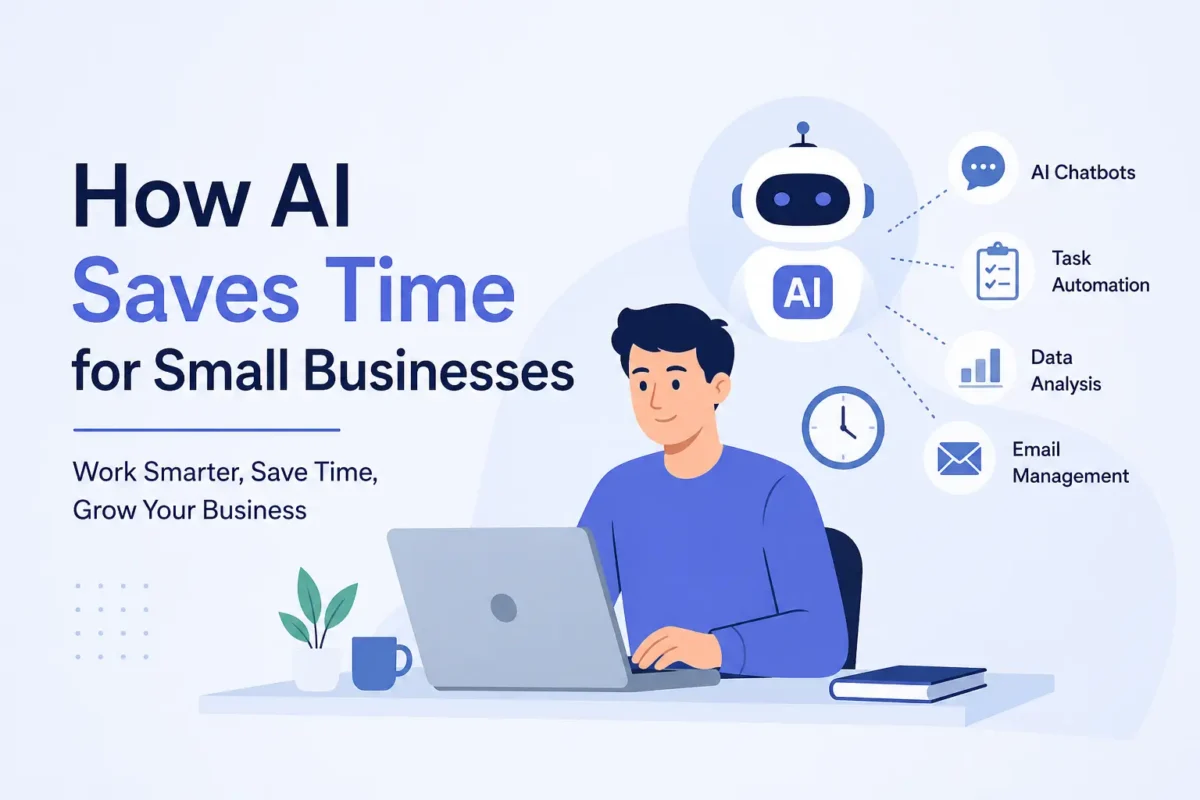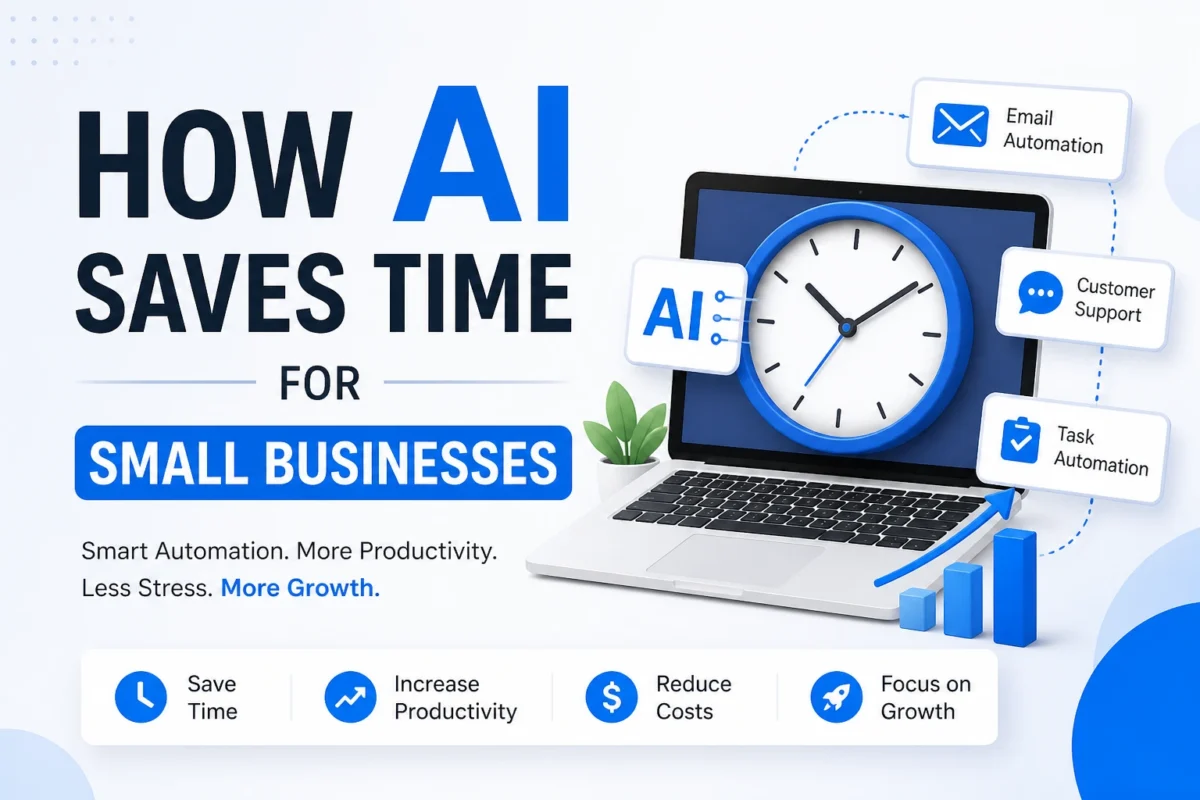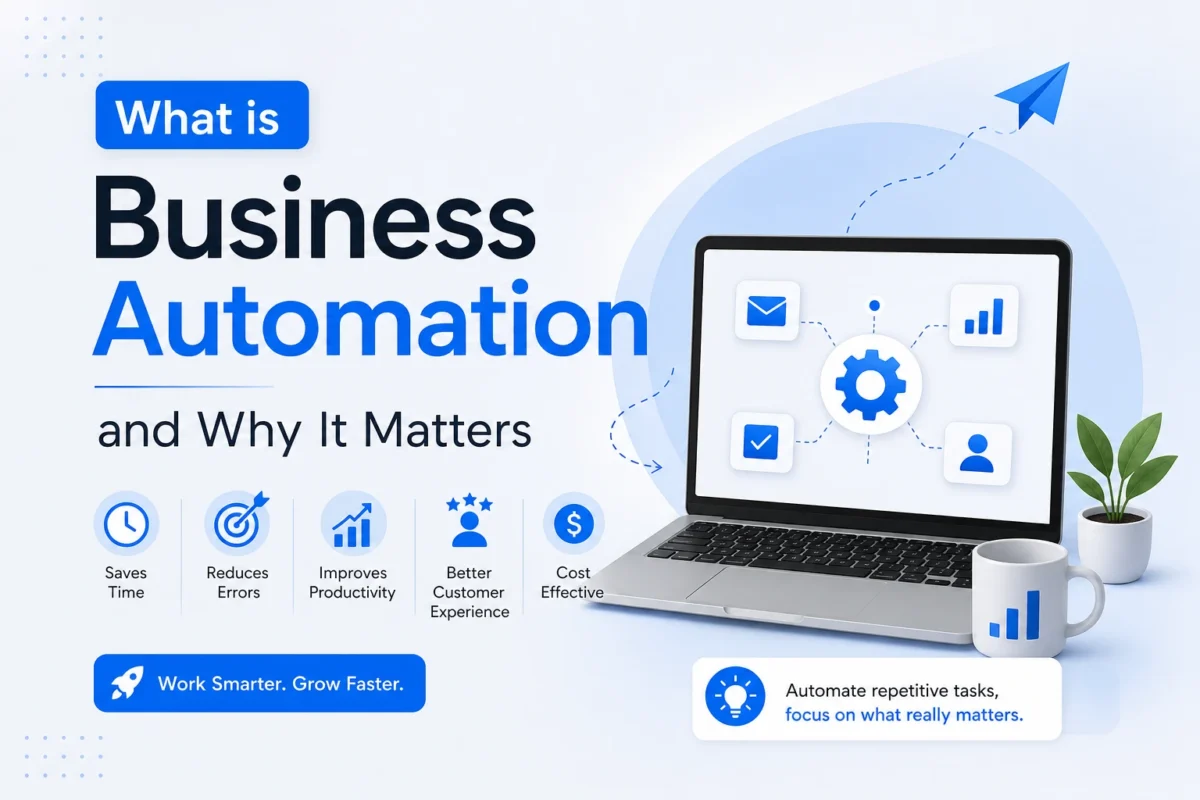
In today’s fast-moving digital world, businesses need speed, accuracy, and efficiency. Doing everything manually takes too much time and effort. That is where business automation comes in.
Business automation helps companies use technology to handle repetitive tasks automatically. This saves time, reduces errors, and improves productivity. To understand the concept better, you can read more about automation.
What is Business Automation?
Business automation means using software, tools, or systems to perform business tasks without human effort.
Instead of doing things manually, companies set up systems that work automatically.
For example:
- Sending emails automatically
- Managing customer data in CRM systems
- Posting on social media at scheduled times
- Processing orders without manual input
In simple words, business automation makes your business run on “auto mode”.
You can also learn about automation in general here.
How Business Automation Works
Business automation works through workflows.
A workflow is a set of steps that run automatically based on rules.
Example:
- A customer fills out a form
- The system saves the data
- An email is sent automatically
- The sales team gets a notification
All of this happens without manual work.
Tools like n8n, Zapier, and CRM systems are often used for this.
Why Business Automation Matters
Business automation is not just a trend. It is now a need for modern businesses.
1. Saves Time
Automation handles repetitive tasks so you can focus on important work.
2. Reduces Human Errors
Manual work often leads to mistakes. Automation makes processes more accurate.
3. Improves Productivity
Your team can do more work in less time.
4. Better Customer Experience
Fast replies and quick service improve customer satisfaction.
5. Cost Effective
Less manual work means you can save money on operations.
Types of Business Automation
1. Marketing Automation
- Email campaigns
- Social media scheduling
- Lead generation
2. Sales Automation
- CRM systems
- Lead tracking
- Follow-up emails
3. Workflow Automation
- Data processing
- Task management
- Approval systems
4. Customer Support Automation
- Chatbots
- Auto-replies
- Ticket systems
Tools Used in Business Automation
Some popular tools include:
- n8n (workflow automation)
- Zapier
- HubSpot CRM
- Mautic (email marketing automation)
These tools help connect different apps and automate tasks easily.
Benefits of Business Automation
Business automation provides long-term growth advantages:
- Faster operations
- Scalable business system
- Better data management
- Strong customer relationship
- 24/7 system working ability
Is Business Automation Right for Small Businesses?
Yes, absolutely. Even small businesses can use automation to:
- Manage customers
- Send marketing emails
- Handle orders
- Track leads
It helps small businesses compete with bigger companies.
Common Myths About Business Automation
Business automation is growing fast, but many people still misunderstand how it works. Some think it is expensive, complicated, or only useful for large companies. In reality, automation can help businesses of all sizes save time and improve productivity.
Myth 1: Automation Replaces Humans
One of the biggest myths is that automation removes the need for people. The truth is automation is designed to support human work, not replace it.
Automation handles repetitive tasks like sending emails, organizing data, creating reports, or managing workflows. This allows people to focus on creative work, customer support, and business growth.
Instead of replacing employees, automation often helps teams become more efficient and less stressed.
Myth 2: Automation Is Too Expensive
Many business owners think automation requires a huge budget. While some enterprise systems can be expensive, there are many affordable and even free tools available today.
Platforms like n8n, WordPress automation tools, Docker-based apps, and email automation systems make it possible to start with very low costs.
Small businesses can automate tasks step by step without spending thousands of dollars.
Myth 3: Automation Is Only for Big Companies
Automation is not limited to large corporations. In fact, small businesses often gain the biggest advantages because automation saves time and reduces manual work.
A small business owner can automate:
- Customer follow-up emails
- Social media posting
- Invoice generation
- Website backups
- Lead collection
- Appointment reminders
These simple automations can improve productivity and help businesses grow faster.
Final Thoughts
Business automation is no longer a luxury. It is becoming an essential tool for improving efficiency and saving time.
Whether you run a startup, a small business, or a growing company, automation can help simplify daily operations and allow you to focus on what matters most.