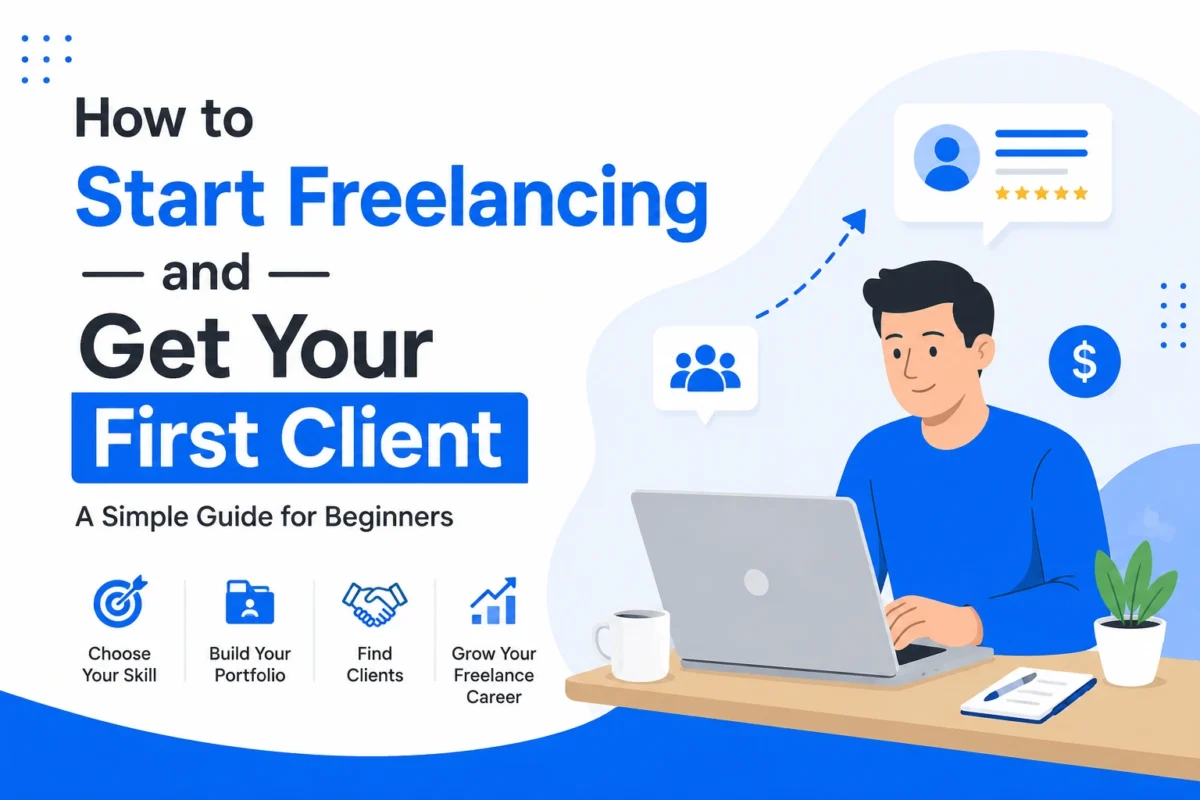
How to Start Freelancing and Get Your First Client
Starting freelancing can feel exciting and scary at the same time. Many beginners have skills but don’t know how to find their first client. The good news is that every successful freelancer started from zero. With the right steps and patience, you can build a freelancing career and start earning online.
In this guide, you’ll learn how to start freelancing and get your first client even if you have no previous experience.
What is Freelancing?
Freelancing means working independently and providing services to clients. Instead of working for one company full-time, freelancers work on different projects for different clients.
Popular freelance services include:
- Website Design
- WordPress Development
- Graphic Design
- Content Writing
- SEO Services
- Video Editing
- Social Media Management
- Virtual Assistant Services
- Automation and AI Services
Step 1: Choose a Skill You Want to Offer
The first step is selecting a skill that people are willing to pay for.
Don’t try to learn everything at once. Focus on one skill and improve it through practice.
Some beginner-friendly skills include:
- WordPress Website Design
- Elementor Website Building
- Blog Writing
- Graphic Design
- Search Engine Optimization (SEO)
- Data Entry
The better your skill becomes, the easier it will be to attract clients.
Step 2: Build a Simple Portfolio
Clients want proof that you can do the work.
If you don’t have client projects yet, create sample projects yourself.
For example:
- Design a demo website
- Create a sample logo
- Write a few blog posts
- Build a landing page
A portfolio helps clients trust your abilities and increases your chances of getting hired.
Step 3: Create Profiles on Freelance Platforms
Freelance marketplaces are one of the easiest places to find your first client.
Popular platforms include:
Make sure your profile includes:
- A professional photo
- A clear headline
- Your skills and services
- Portfolio samples
- A friendly introduction
A complete profile looks more professional and trustworthy.
Step 4: Write Better Proposals
Many beginners send the same proposal to every client.
Instead, read the job description carefully and write a personalized proposal.
A good proposal should:
- Mention the client’s needs
- Explain how you can help
- Show confidence
- Be short and clear
Clients prefer freelancers who understand their problems and provide solutions.
Step 5: Start with Small Projects
Don’t wait for large projects immediately.
Small projects help you:
- Gain experience
- Build confidence
- Collect positive reviews
- Create long-term client relationships
Your first goal should be getting experience and building trust.
Step 6: Use LinkedIn and Social Media
Many freelancers find clients through social media.
Create a professional LinkedIn profile and share:
- Your work samples
- Project results
- Helpful tips
- Industry updates
You can also join Facebook groups where business owners look for freelancers.
Step 7: Network with People
Networking is important in freelancing.
Connect with:
- Business owners
- Entrepreneurs
- Website owners
- Other freelancers
The more people who know about your services, the more opportunities you’ll receive.
Step 8: Deliver Quality Work
When you get your first client, focus on delivering your best work.
Always:
- Meet deadlines
- Communicate clearly
- Be professional
- Solve problems quickly
Happy clients often return with more work and refer you to others.
Common Mistakes New Freelancers Make
Avoid these common mistakes:
- Charging too little
- Applying for every job
- Sending generic proposals
- Missing deadlines
- Ignoring client messages
- Giving up too early
Success in freelancing takes consistency and patience.
Final Thoughts
Learning how to start freelancing and get your first client is easier when you follow a clear plan. Focus on improving your skills, creating a portfolio, building a strong profile, and applying for jobs consistently.
Your first client may take some time to find, but once you complete your first project successfully, getting future clients becomes much easier. Stay patient, keep learning, and continue improving your skills.
Freelancing is not only a way to earn money online—it can become a long-term career that gives you freedom and growth opportunities.
-
Can I start freelancing with no experience?
Yes. You can create sample projects and build a portfolio before working with real clients.
-
Which freelancing skill is best for beginners?
WordPress design, content writing, graphic design, SEO, and virtual assistance are great beginner-friendly options.
-
How long does it take to get the first freelance client?
It varies. Some freelancers get clients within days, while others may take a few weeks or months. Consistency is important.
-
Do I need a website to start freelancing?
No, but having a portfolio website can increase trust and help you attract more clients.
-
Which freelancing platform is best?
Upwork and Fiverr are among the most popular platforms for beginners and experienced freelancers.